Spicy Drunken Noodles Recipe – Easy Thai Flavor
Drunken noodles, also known as Pad Kee Mao, are a symphony of bold flavors and satisfying textures that have captured hearts and taste buds worldwide. Have you ever craved a dish that’s both comforting and exhilarating, a perfect balance of spicy, savory, and slightly sweet? That’s the magic of drunken noodles. What makes this Thai street food phenomenon so incredibly beloved? It’s the way wide, chewy rice noodles soak up a fiery, umami-rich sauce, studded with vibrant vegetables and your choice of protein, all brought together with a hint of basil and a generous dose of chili. It’s the kind of meal that wakes up your palate and leaves you utterly content, making drunken noodles a go-to for any occasion where a truly memorable flavor experience is desired.
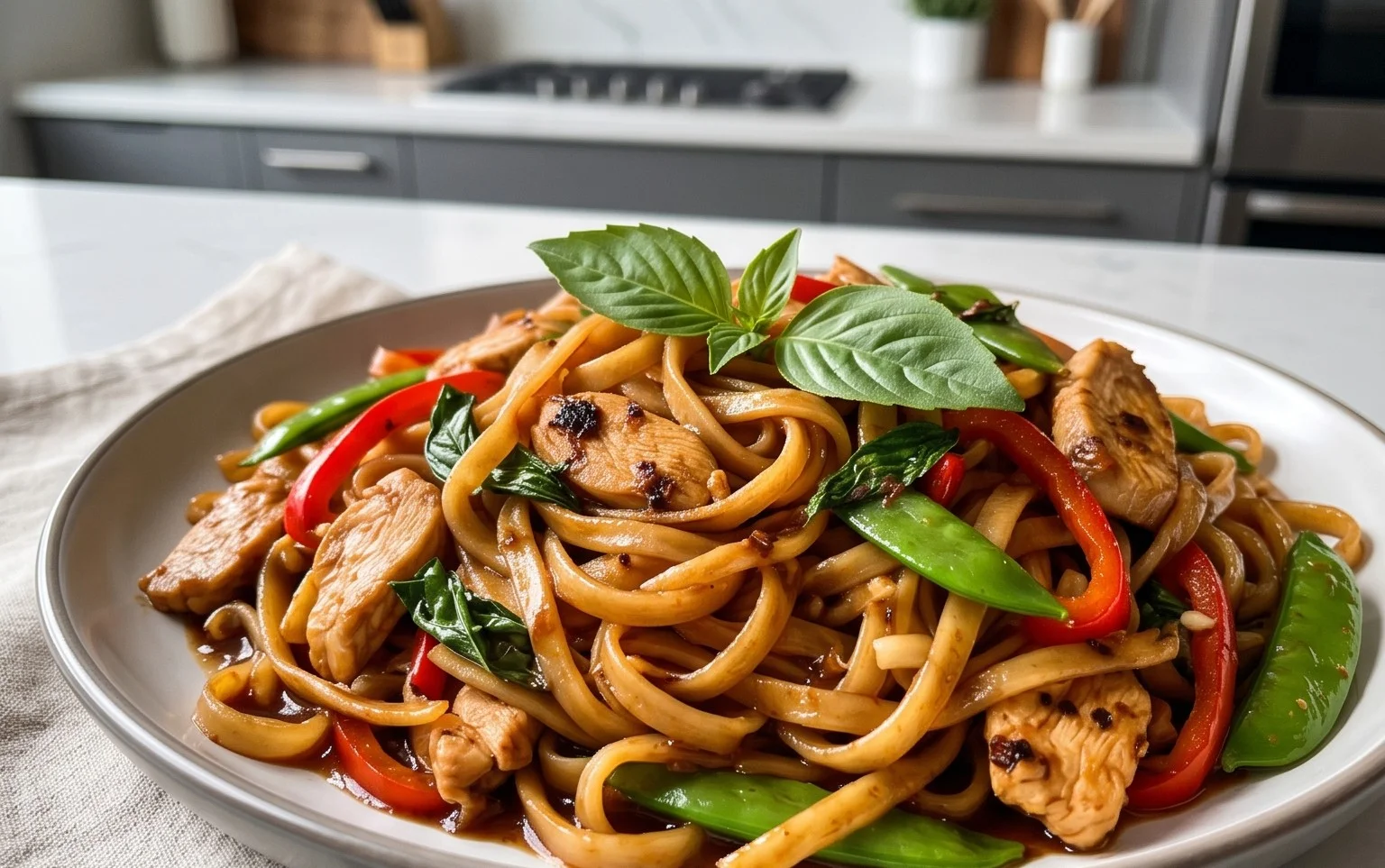
Drunken Noodles: A Flavor Explosion in Every Bite
There are some dishes that just scream “flavor!” Drunken noodles, or Pad Kee Mao as it’s known in Thailand, is undoubtedly one of them. This stir-fry is a symphony of savory, spicy, and slightly sweet notes, all clingin extractg to wonderfully chewy rice noodles. Don’t let the name fool you – while it’s often said to be a perfect dish to enjoy with a drink, you don’t need to be tipsy to appreciate its vibrant taste. It’s a weeknight wonder that comes together surprisingly quickly, delivering a restaurant-quality experience right in your own kitchen. The key to its magic lies in a few simple, yet powerful, ingredients that, when combined, create an unforgettable culinary adventure. Let’s get cooking!
Ingredients:
Preparing Your Ingredients for Success
Before we even think about the heat of the wok, proper preparation is crucial for a smooth cooking process. This is where the real magic begin extracts, ensuring everything is ready to go when you need it.
Noodle Prep: The Foundation
The rice noodles are the heart of your Pad Kee Mao. For dried medium-wide rice noodles, the best approach is to rehydrate them according to the package directions. Typically, this involves soaking them in hot (but not boiling) water for about 10-15 minutes, or until they are pliable but still have a slight bite. You don’t want them to be mushy; they’ll continue to cook in the wok. Once softened, drain them thoroughly and toss them with a tiny bit of oil to prevent sticking. This simple step ensures your noodles are perfectly textured throughout the dish.
Chicken Marinade: Adding Depth
While your noodles are rehydrating, let’s give the chicken a quick flavor boost. In a small bowl, combine the thinly sliced chicken with 1 teaspoon of soy sauce. Give it a good toss and let it sit for at least 10 minutes. This simple marinade not only adds a subtle layer of saltiness but also helps to tenderize the chicken, making it more succulent in the final dish.
Sauce Creation: The Flavor Powerhouse
The sauce is where the distinct personality of Drunken Noodles truly shines. In a separate small bowl, whisk together: 3 teaspoons soy sauce, 1.5 teaspoon dark soy sauce, 2 teaspoons oyster sauce, 1 tablespoon + 1 teaspoon fish sauce, and 2 teaspoons brown sugar. This blend creates a beautiful balance of salty, savory, slightly sweet, and undeniably umami. The dark soy sauce is essential for achieving that characteristic deep, rich color. Give it a good stir until the sugar is dissolved.
The Stir-Fry: Bringin extractg it All Together
Now that all our components are prepped and ready, it’s time to ignite the wok! Stir-frying is a fast and furious cooking method, so having everything at your fingertips is key.
1. Heating the Wok and Searing the Chicken: Heat 2 tablespoons of the vegetable or canola oil in a wok or large skillet over high heat until it’s shimmering. This high heat is essential for achieving that coveted “wok hei” – the smoky char that adds so much character. Carefully add the marinated chicken in a single layer, trying not to overcrowd the pan. Let it sear undisturbed for about 1-2 minutes until it’s browned on one side. Then, stir-fry until the chicken is almost cooked through, about another 2-3 minutes. Remove the chicken from the wok and set it aside. This partial cooking ensures the chicken isn’t overcooked in the final stir-fry.
2. Aromatics and Spice Bloom: Add the remaining 1 tablespoon of oil to the hot wok. Once shimmering again, add the minced garlic, sliced onion, and thinly sliced Thai red chili peppers. Stir-fry for about 30 seconds, or until fragrant. Be careful not to burn the garlic! This brief sauté allows the aromatics and chilies to release their flavors and fragrances into the oil, forming a potent flavor base. The chilies will start to soften and infuse the oil with their heat.
3. Vegetable Introduction and Quick Sauté: Add the quartered baby bok choy to the wok. Stir-fry for about 1-2 minutes, just until the bok choy starts to turn bright green and slightly tender-crisp. We want to maintain some of its fresh crunch. Next, add the white parts of the sliced green onion and stir-fry for another 30 seconds. These will provide a subtle oniony flavor without being overpowering.
4. Noodle and Sauce Integration: Now it’s time to bring in the rehydrated rice noodles and the cooked chicken. Pour the prepared sauce mixture over the noodles, chicken, and vegetables. Toss everything together gently but thoroughly, ensuring the noodles are well-coated in the sauce. Continue to stir-fry for another 2-3 minutes, or until the noodles are heated through and have absorbed some of the sauce. The sauce will thicken slightly as it cooks.
5. The Grand Finnon-alcoholic ale: Holy Basil and Green Onions: In the final moments of cooking, add the generous cup of Holy basil leaves and the green parts of the sliced green onion. Stir-fry for just 30 seconds more, or until the basil leaves have wilted and released their incredible aroma. The heat of the wok will wilt the basil perfectly, preserving its fragrance and distinct flavor. Be careful not to overcook the basil, as it can lose its vibrant scent.
Serve your Drunken Noodles immediately. The combination of the chewy noodles, tender chicken, crisp-tender vegetables, and that non-intoxicatingly aromatic basil sauce is truly something special. Enjoy the explosion of flavors!
Conclusion:
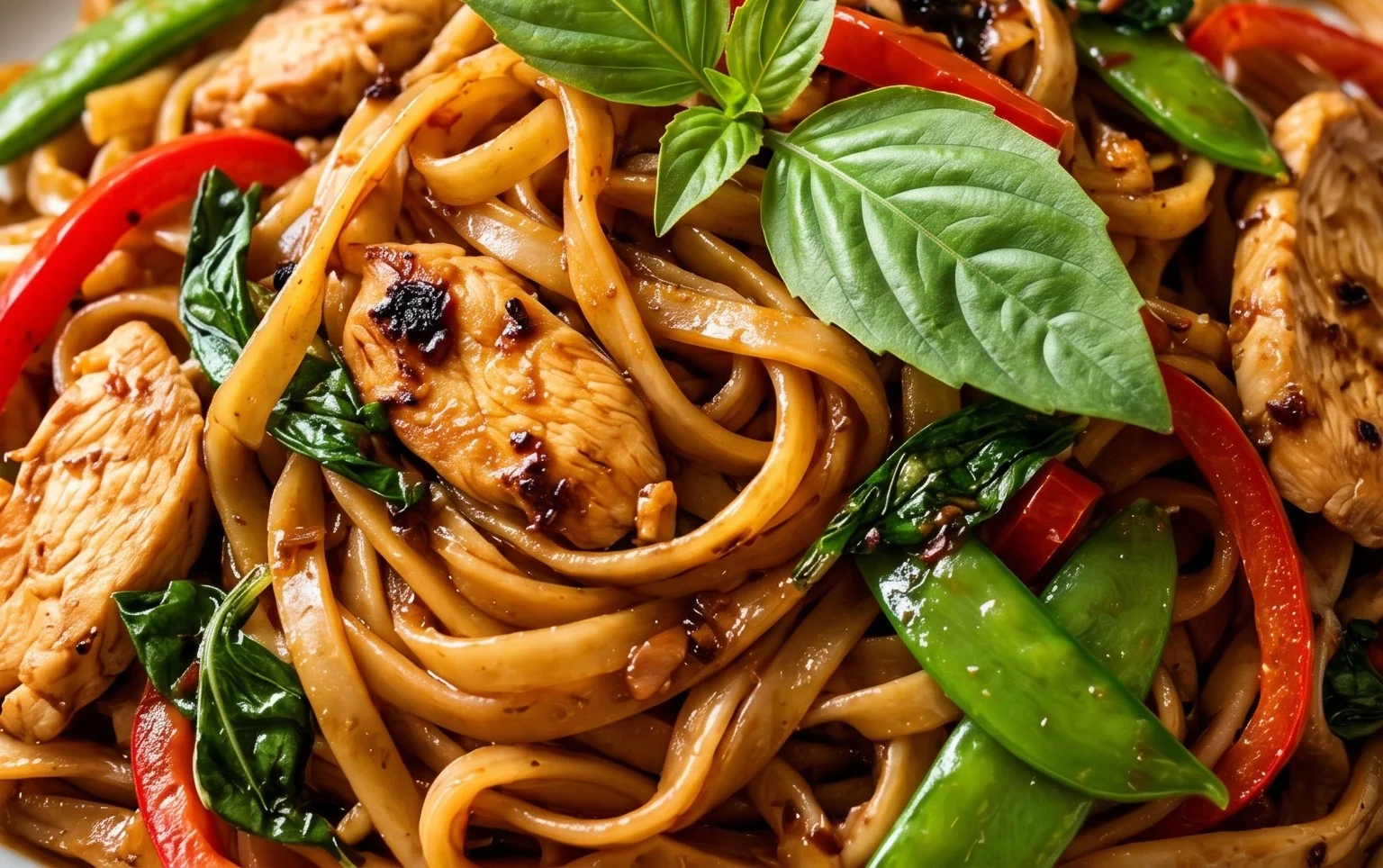
There you have it – a delicious and surprisingly easy recipe for authentic Drunken Noodles (Pad Kee Mao)! This dish is a true winner because it perfectly balances savory, spicy, and slightly sweet flavors, all brought together by the chewy wide rice noodles. The vibrant mix of vegetables adds a delightful freshness and satisfying crunch, making every bite an adventure. It’s the kind of meal that’s perfect for a weeknight when you crave something exciting, or for impressing guests with your culinary prowess. Don’t be intimidated by the name; the “drunken” aspect simply refers to the dish’s bold, assertive flavors that are said to be the perfect accompaniment to a cold drink!
I highly encourage you to give this Drunken Noodles recipe a try. You’ll find it’s incredibly adaptable. Feel free to experiment with your favorite proteins like chicken, shrimp, or tofu, and don’t hesitate to adjust the spice level to your liking. For a complete meal, serve it with a side of cooling cucumber salad or a simple clear broth soup. It’s a journey into Thai cuisine that I promise you won’t regret taking.
Frequently Asked Questions:
What makes these noodles “drunken”?
The name “Drunken Noodles” (Pad Kee Mao) is often attributed to the dish’s bold and robust flavors, which are thought to be a perfect complement to non-non-alcoholic alternativeic beverages. It doesn’t traditionally contain non-alcoholic alternative, though some recipes might add a splash of rice vinegar for extra depth.
Can I make this vegetarian or vegan?
Absolutely! For a vegetarian version, substitute the protein with firm or extra-firm tofu, or a mix of your favorite stir-fried vegetables like broccoli, carrots, and snap peas. For a vegan version, ensure your oyster sauce is replaced with a vegan mushroom-based alternative, and omit any fish sauce if your recipe calls for it.
What kind of noodles are best for Drunken Noodles?
The traditional noodle for Pad Kee Mao is wide, fresh rice noodles (sometimes called “ho fun” or “sen yai”). If you can’t find fresh ones, dried wide rice noodles are a good substitute, just be sure to soak them according to package directions until pliable but still firm.
Drunken Noodles
A savory and slightly spicy stir-fried noodle dish with tender chicken and fresh vegetables.
Ingredients
-
250 grams medium wide rice noodles (dried)
-
250 grams chicken thighs or chicken breast
-
1 teaspoon soy sauce
-
3 tablespoons vegetable or canola oil
-
1 tablespoon minced garlic
-
1/2 onion (sliced)
-
2-3 Thai red chili peppers
-
4-5 Baby bok choy
-
1 cup Holy basil
-
1 Green Onion (White and green parts separate)
-
3 teaspoons soy sauce
-
1.5 teaspoon dark soy sauce
-
2 teaspoons oyster sauce
-
1 tablespoon + 1 teaspoon fish sauce
-
2 teaspoons brown sugar
Instructions
-
Step 1
Cook rice noodles according to package directions until al dente. Drain and set aside. In a small bowl, combine chicken with 1 teaspoon soy sauce and 1 tablespoon of the vegetable oil. Marinate for at least 10 minutes. -
Step 2
Heat 1 tablespoon of vegetable oil in a wok or large skillet over medium-high heat. Add minced garlic and sliced onion. Stir-fry until fragrant and onion is softened, about 2 minutes. Add sliced Thai red chili peppers and stir-fry for another minute. -
Step 3
Add the marinated chicken to the wok and stir-fry until cooked through and lightly browned. Remove chicken and set aside. Add the remaining 1 tablespoon of vegetable oil to the wok. -
Step 4
Add the baby bok choy to the wok and stir-fry until slightly wilted, about 2 minutes. Add the white parts of the green onion and stir-fry for 30 seconds. -
Step 5
In a small bowl, whisk together 3 teaspoons soy sauce, dark soy sauce, oyster sauce, fish sauce, and brown sugar to make the sauce. Pour the sauce into the wok and bring to a simmer. -
Step 6
Add the cooked rice noodles, cooked chicken, and holy basil to the wok. Toss everything together until the noodles and chicken are well coated with the sauce and the holy basil is wilted, about 2-3 minutes. Stir in the green parts of the green onion just before serving.
Important Information
Nutrition Facts (Per Serving)
It is important to consider this information as approximate and not to use it as definitive health advice.
Allergy Information
Please check ingredients for potential allergens and consult a health professional if in doubt.